Captatio oculi
Galerie Séquence, Chicoutimi
Du 28 avril au 5 juin 2011
L’exposition Captatio oculi conçue par le commissaire Sylvain Campeau réunit les projets d’Alexandre Castonguay, Jean-Pierre Aubé, Martin Boisseau et Sofian Audry.
Les oeuvres retenues par le commissaire emploient des instruments qui captent leur environnement immédiat ou lointain et retransmettent les données dans l’espace après leur avoir imposé des transformations. Chaque installation comporte ses propres relais technologiques et procédés dont les effets varient d’une à l’autre. Les spectateurs sont appelés à questionner les opérations effectuées par les machines.
Captures numériques | Sylvain Campeau
Nous avons tous vécu la révolution. Nous le savons sans le savoir. Mais ne sommes plus ce que nous étions il y a peu. Nous sommes aujourd’hui équipés de toutes sortes d’appareils que nous n’avions pas il y a tout juste 10 ou 20 ans. Des appareils avec lesquels nous entrons de plus en plus fréquemment en relation. C’est-à-dire que nous entrons, par leur intermédiaire, en relation les uns avec les autres, bien sûr, mais aussi que, ce faisant, nous entrons en relation avec eux. Quand nous avons des amis sur Facebook et Twitter ou quand nous cherchons des numéros de téléphones et adresses sur l’ordinateur au détriment des pages jaunes, c’est à faciliter et même alimenter les rapports que nous avons entre nous que ces outils s’emploient. Mais quand nous consultons aux 10 minutes notre téléphone cellulaire intelligent pour voir qui nous a laissé un courriel et que nous regardons davantage notre GPS que les rues environnantes pour trouver la direction de notre destination, il faut convenir de la force d’attraction de ces appareils et de l’ascendant que leur dispositif particulier a pris sur nous. Et tous ces instruments nous sont devenus indispensables, des instruments que nous n’avions pas il n’y a pas si longtemps.
Par et avec ces appareils, nous sommes confrontés à une nouvelle façon d’appréhender la réalité. Le fait n’a pas échappé aux artistes qui ont choisi de s’en remettre à ces dispositifs nouveau genre pour investiguer notre rapport au réel et la manière dont ces instruments procèdent du réel. Pour ces outils, en effet, le réel est matière à données. Par eux, la réalité peut être réduite à une dimension nouvelle qui la rend malléable à l’infini, protéiforme et multiforme. Cette dimension, c’est la pure et simple donnée numérique. Grâce à elle, le réel est avalé en miettes, digéré en données et régurgité en formes diverses, images, sons ou autres.
Depuis, il ne peut être question d’analogie, de copie, de représentation, d’indices ou de traces. Il faut maintenant parler de saisie de données, qui sont d’abord numériques, puis ensuite, mais pas toujours, visuelles et/ou sonores. Mais il incombe, surtout, de parler d’interface et de captation.
D’interface, puisque c’est à la pointe de ce contact entre réel et machine d’enregistrement des données, puis entre celle-ci et l’humain que se résume l’expérience du réel. C’est sur ces surfaces interconnectées que se fonde ce qui sera l’œuvre d’art. Captation, puisque tout est affaire de saisie, de préhension sur le monde. Il faut bien, en premier lieu, que des segments du monde, sonores, visuels, soient, d’une certaine façon, « entrés » dans le creuset des transformations virtuelles ̶ l’ordinateur qui est en effet un ordonnateur des informations ̶ agencées selon le formatage et les fonctions que des logiciels leur imposent.
Dans un texte antérieur, j’ai déjà avancé que la photographie numérique ne menait pas à une révolution si grande que l’on supposait(1). S’il est vrai que toute la réflexion basée sur une logique de l’index, de la saisie et de la reproduction d’un ayant-été-là, ne correspond plus à ce qu’accomplit le numérique, il n’est reste pas moins qu’une captation demeure à la base de la majorité des œuvres photographiques d’aujourd’hui qui, presque toutes, de près ou de loin, s’abandonnent aujourd’hui au numérique.
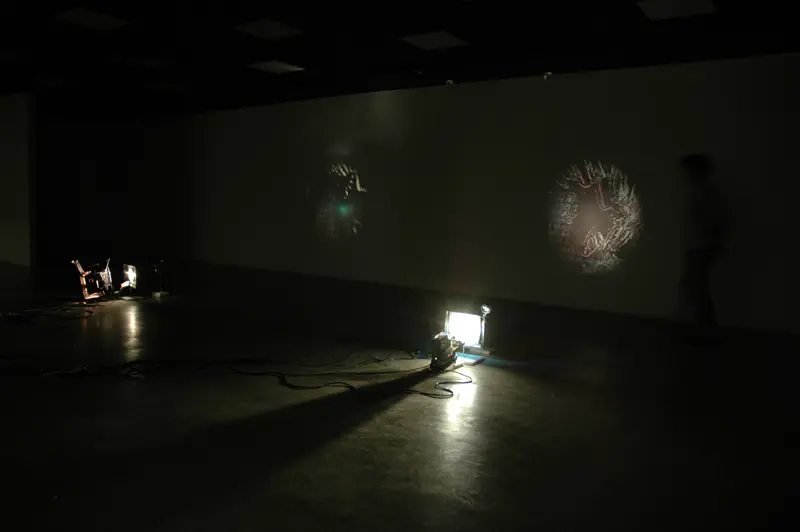
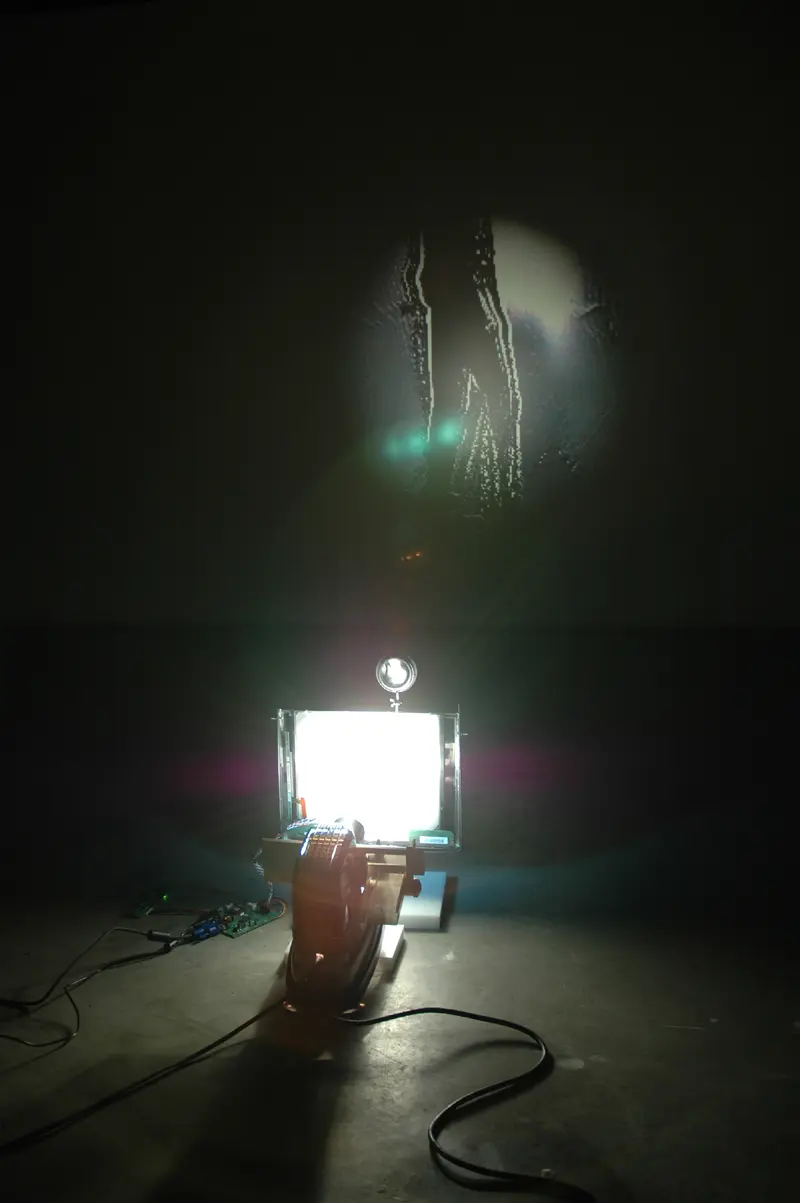
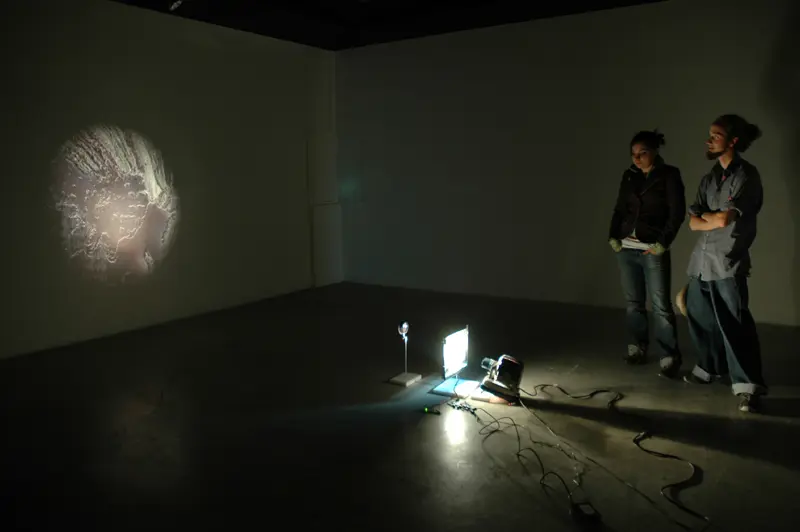
On comprendra dès lors aisément ce qui a bien pu me séduire dans Éléments d’Alexandre Castonguay. Nous avons là une théâtralisation de machines évoquant la photographie, son modèle originel, la projection par camera obscura, mais combinée à des modes d’altération qui sont, eux, proprement numériques. Y apparaissent autant des émissions lumineuses passées au sas d’une lentille que des films de cristaux liquides agissant tels une diapositive. Sans oublier une référence à la vidéographie par cette capture d’images des spectateurs et leur reproduction en temps réel.
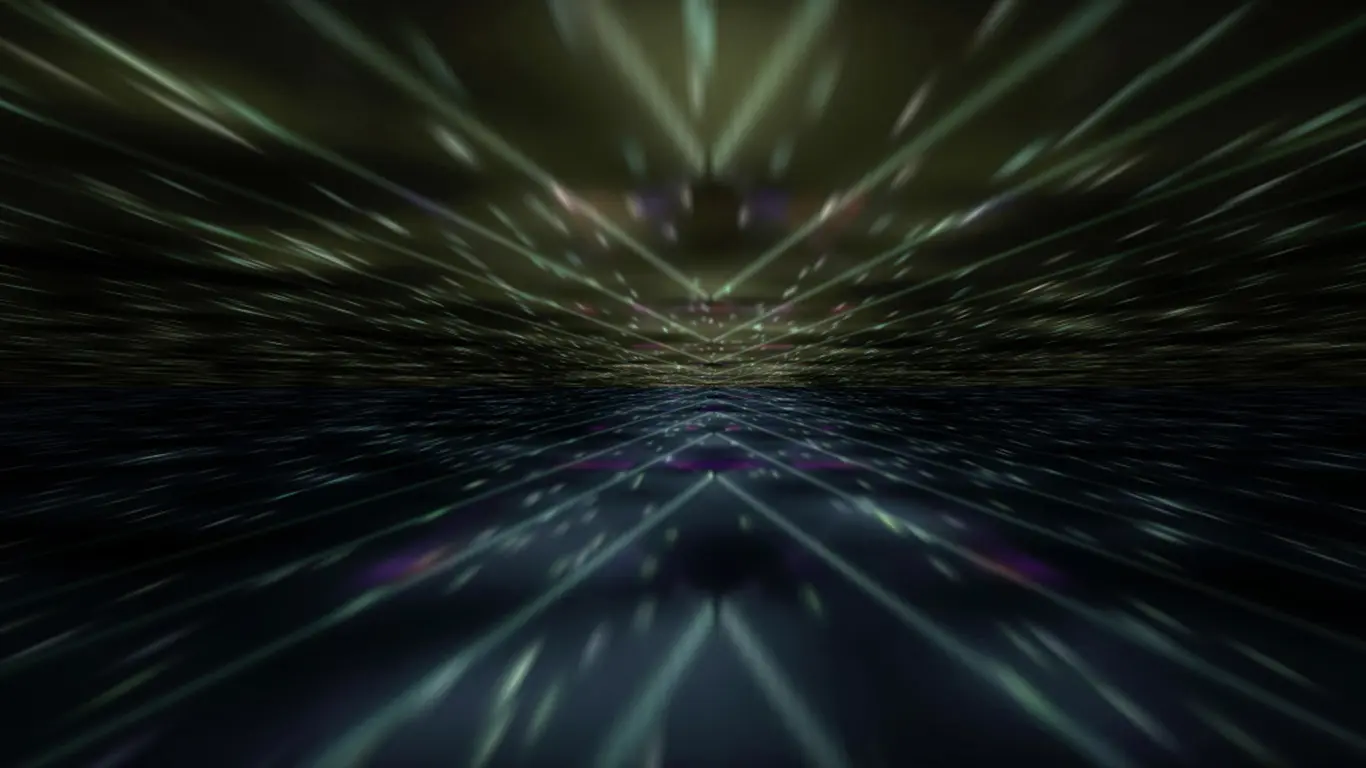
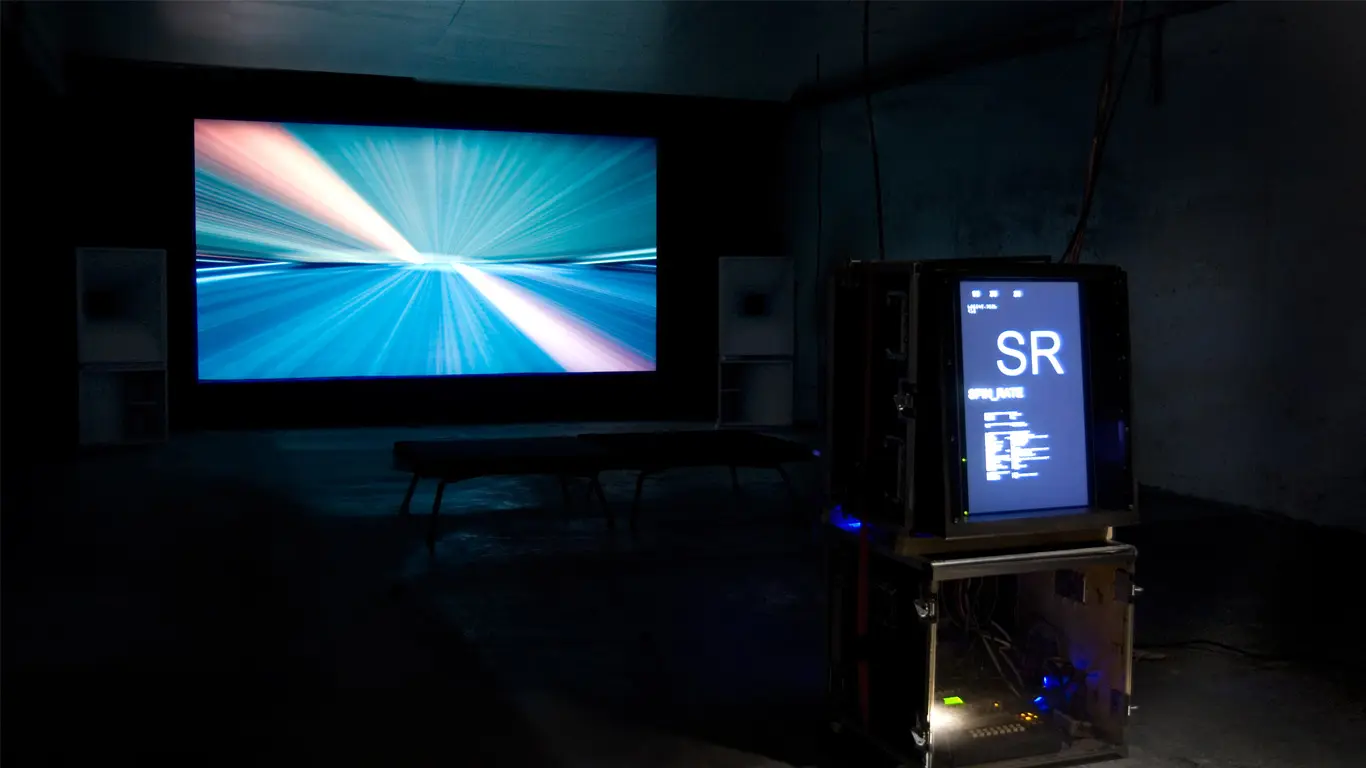
Le Titan et au-delà de l’infini de Jean-Pierre Aubé est spectaculaire. Mais les images qu’il montre, ne sont reproductions de rien qui soit réel. Elles résultent d’un message radio d’une durée de 2 minutes, envoyé par un drone depuis Titan, une lune en orbite autour de Saturne. Ce fichier sonore contient des données télémétriques que l’artiste, à l’aide d’un logiciel, a réussi à organiser sous forme de graphique, puis à compiler grâce à un algorithme. L’image cinétique qui en découle est ici affaire de données, d’informations codifiées. Si la captation demeure l’opération première dont tout dépend, son contenu importe peu puisqu’il en a été tout autre chose que ce à quoi on la destinait à l’origine.
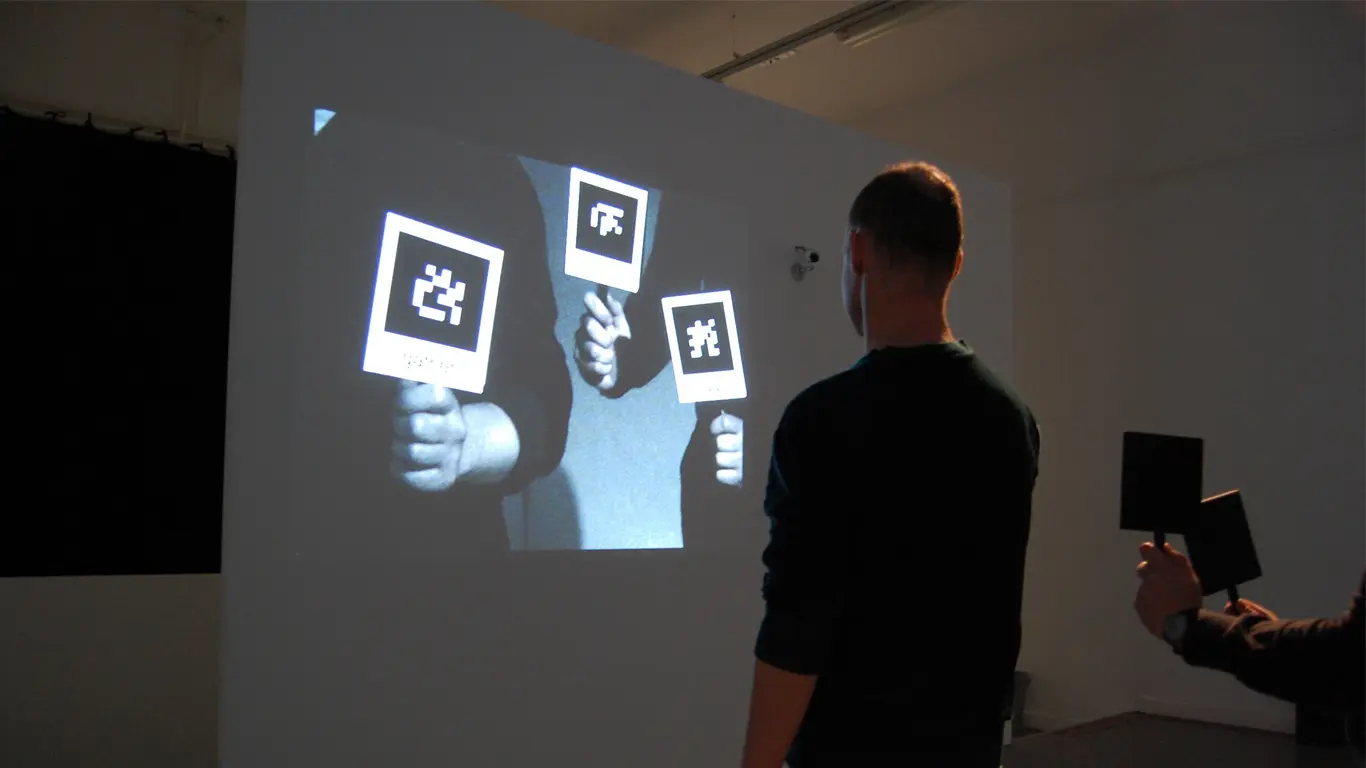
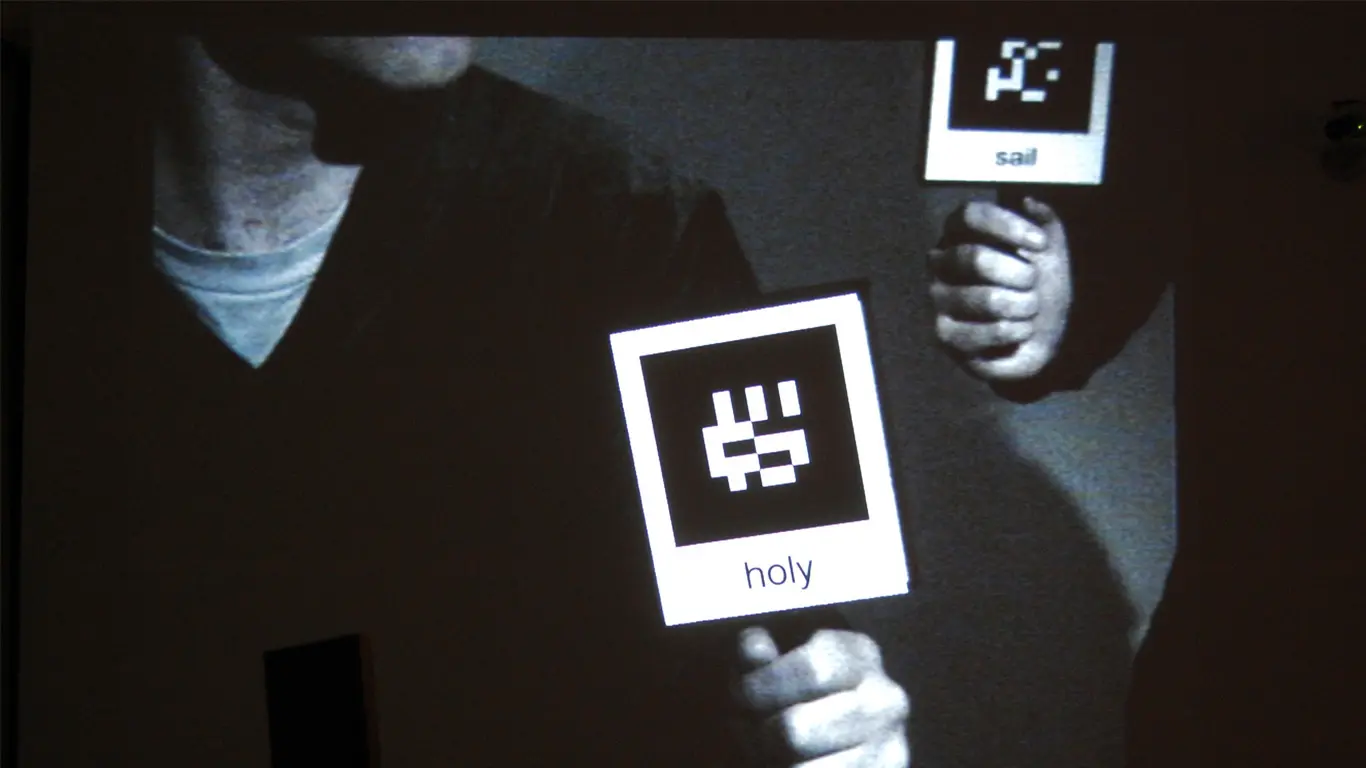
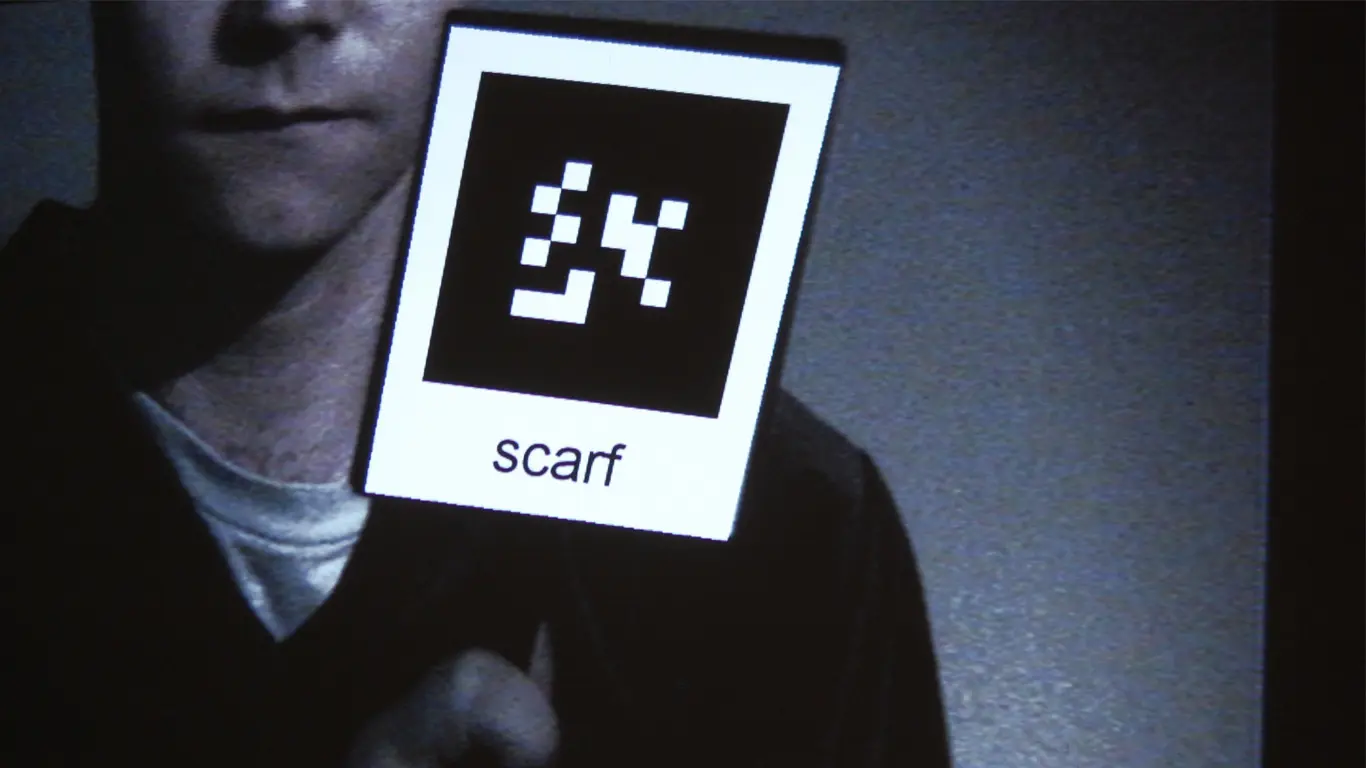
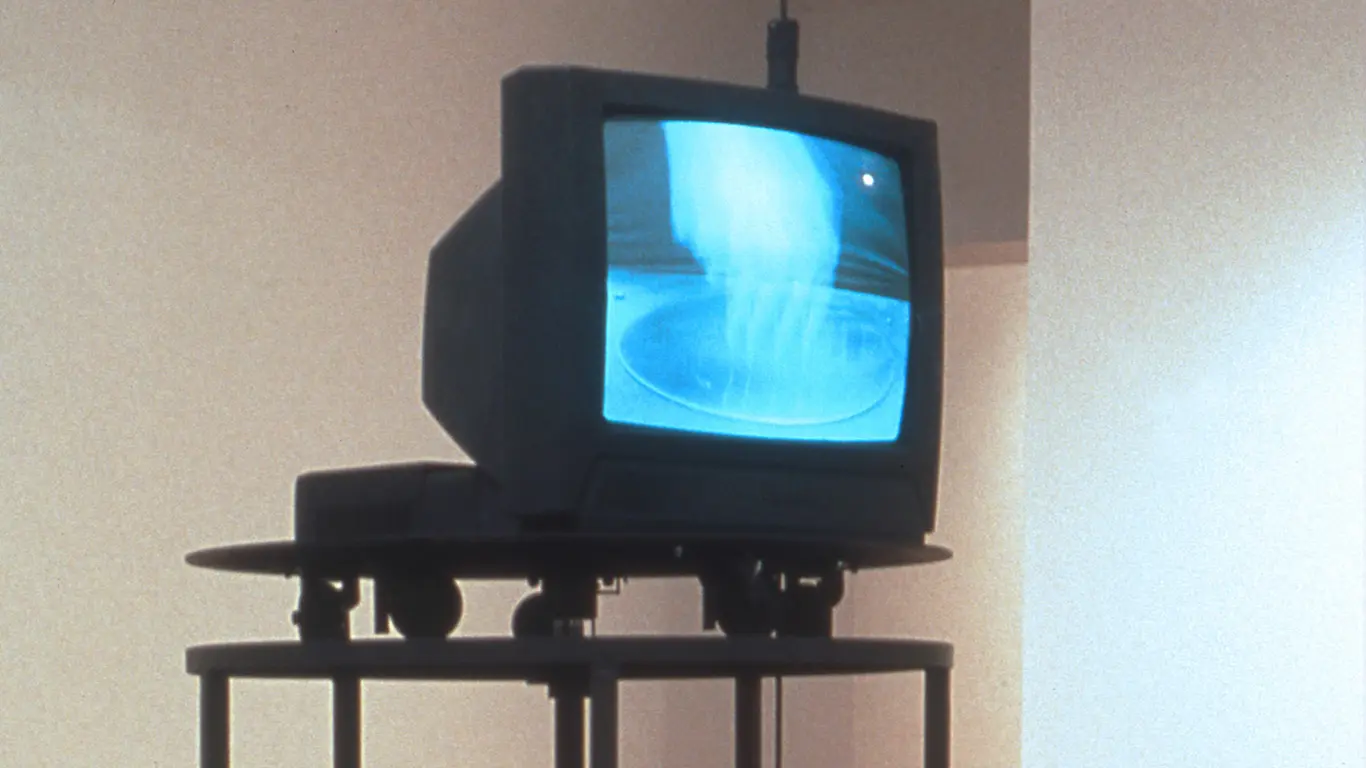
Il y a un même effet de captation altérée dans les œuvres de Sofian Audry et de Martin Boisseau. Chez le premier, une image du spectateur, muni d’une affichette, est prise en temps réel et reproduite grâce à une projection. Mais, le mot sur l’affichette du spectateur n’est pas le même que celui qu’il voit dans l’image. Un autre s’y est substitué, qui s’en inspire. Nous avons là une captation déformée par des informations numériques modélisées pour perturber la véridicité de la projection en temps réel. Le système se livre à des glissements sémantiques, des extensions, des métonymies approximatives. Chez Martin Boisseau, la captation est (presque) strictement respectée. Un mécanisme, déjà utilisé dans une œuvre antérieure, est repris pour une projection en effet rotatif. L’image projetée est celle de la galerie même où elle est présentée. Effet de redondance, donc, moyennant peut-être quelques modifications mineures. De plus, l’on entend une voix qui se mêle de décrire le lieu montré, en plus d’y aller de quelques remarques et réflexions sur le sens de cette représentation, sur cette suppléance de l’art sur le réel.
En toutes ces œuvres, le résultat final ne révèle rien des machinations internes, des relations fondamentales qui régissent le spectacle offert. Photographie, vidéographie, données numériques, transcodages et altérations des informations originelles, le donné à voir est spectaculaire, un plaisir pour l’œil, mais les tréfonds de ces performances ne sont pas tant présences effectives que captures numériques…
Sylvain Campeau
1. Sylvain Campeau, « Captation », L’imprimé numérique en art contemporain, Trois-Rivières, Éditions d’art Le Sabord, Collection Essai, 2007, p. 29-34.
Sylvain Campeau
Sylvain Campeau est poète, critique d’art, essayiste et commissaire d’exposition. Il a publié 5 recueils de poésie, un essai sur la photographie (Chambres obscures. Photographie et installation) et une anthologie de poètes québécois (Les Exotiques, Herbes rouges, 2003. En qualité de critique d’art, il a collaboré à Parachute, ETC Montréal (devenu ETC), C Magazine, Vie des arts, CV Photo (devenu Ciel Variable), Spirale. À ce titre et à celui d’essayiste, il est l’auteur de nombreux textes parus dans des monographies d’artiste, des catalogues d’expositions et des revues étrangères (France, Espagne). De concert avec ces activités, il est en plus commissaire indépendant d’exposition. Depuis 1992, il a ainsi été l’instigateur et le maître d’œuvre de quelque 30 expositions présentées tant au Canada qu’à l’étranger, réalisant entre autres la programmation Espaces vitaux/Extravagances pour les écrans de la salle des arrivées de l’Aéroport Montréal-Trudeau et participant aux Mois de la Photo à Montréal, de même qu’à l’événement la France au Québec/la saison en 2000.
Artistes et œuvres
Alexandre Castonguay
(en collaboration avec Mathieu Bouchard)
Éléments
2004-2005
Installation interactive
Description de l'oeuvre
Éléments met en scène le dispositif communément associé aux arts médiatiques : dans une salle assombrie, des projecteurs diffusent sur les murs l’image, captée puis transformée, des spectateurs. Au nombre de 4, ces éléments correspondent à des motifs de programmatique utilisés fréquemment dans des installations interactives : accumulation d’images dans la durée, relecture en différé de séquences vidéo, effet de convolution qui accompagne les contours des gestes des spectateurs et effet de colorisation arbitraire de l’image sur laquelle le spectateur peut agir. Circulaires comme une camera obscura, pixelisées comme un jeu 8bit, les images projetées appartiennent tant au régime analogique que numérique et situent l’œuvre à même le corps du spectateur. L’éclairage de la salle d’exposition s’allume alors que celui des projecteurs s’éteint. Ce coup de théâtre paradoxal permet une distanciation (Verfremdungseffekt) est rendue possible par un artifice assumé de l’œuvre et force une relecture de celle-ci et de ses effets.
Éléments a été réalisé avec la collaboration de Mathieu Bouchard.
Biographie
Les œuvres d’Alexandre Castonguay exploitent les technologies désuètes et les logiciels libres. Ses installations interactives et photographies ont fait l’objet d’expositions solos au Musée d’art contemporain de Montréal et au Centro de la Imagen au Mexique. Il a pris part à des expositions collectives au Los Angeles County Museum of Art, au Musée canadien de la photographie contemporaine, ainsi qu’à Beijing, Madrid, Berlin et Graz. Enseignant à l’Université d’Ottawa, il est membre fondateur d’Artengine.
Jean-Pierre Aubé
Titan et au-delà de l’infini
2007
Installation vidéo
Description de l'oeuvre
Le 14 janvier 2005, après un voyage de 7 ans et de 3 milliards de kilomètres, le drone Huygens atterit sur Titan, une lune en orbite autour de Saturne. Cette expérience mené par l’Agence Spatiale Européenne esquisse un carnet de voyage d’une contrée encore jamais visitée. Pour réaliser cette vidéo, l’artiste a d’abord programmé un logiciel qui compile et organise les données du voyages de la sonde Huygens sous forme de graphique. Ce logiciel traduit en d’images les différentes métriques des 11 instruments à bord de Huygens. Le titre est une référence directe à une scène de 2001 Odyssey de l’espace : Jupiter, and Beyond the Infinite, communément appelée the Stargate Sequence. Douglas Trumbull réalisa cette scène. Trumbull était illustrateur technique pour la Nasa à l’époque où Kubrick l’engagea. Il adapta pour le cinéma la technique du slit scan, effet d’origine photographique où de longs temps d’exposition sont associés à des mouvements de caméra pour créer l’illusion de déplacement. Les données de Huygens sont donc organisées sous forme de graphique, puis compilées par un algorithme. Les paramètres comme la vitesse, l’altitude, la densité de l’atmosphère de Titan, sont analysées et traduites par mon logiciel d’imagerie virtuelle.
Biographie
Jean-Pierre Aubé est né en 1969 à Kapuskasing (Ontario) et vit à Montréal. Après des études en sculpture et en photographie à l’Université Concordia, il a complété une maîtrise en arts visuels à l’UQAM. Sa démarche interdisciplinaire (performance sonore, art médiatique, installation, photographie) emprunte aux méthodes scientifiques les procédés de collecte de données. Dans cette optique, il fabrique notamment des récepteurs d’ondes hertziennes de très basses fréquences (VLF) qui ont la capacité d’enregistrer les sons des phénomènes naturels présents dans la magnétosphère (orages électriques, aurores boréales, vents solaires). Dans le travail de Jean-Pierre Aubé, la technique est transcendée par une passion pour la complexité du monde matériel, source inépuisable d’inspiration et de transformation des consciences. L’artiste a participé à plusieurs expositions et événements artistiques ici et à l’étranger, dont Rendre réel (Ottawa, 2007, dans le cadre de Scène Québec); Dataesthetics, Nova Gallery (Zagreb, Croatie, 2006); et 11e Biennale de Pancevo (Serbie, 2004). Il a exposé à Québec lors de la 6e édition du Mois Multi (2005) et à Montréal, (Optica, 2005 et Fonderie Darling, 2004).
Martin Boisseau
Septième temps: latéral courbe (pour oeil seul)
2000-2002
Acier, moteur, projecteur, engrenages
Description de l'oeuvre
Septième temps: latéral courbe (pour oeil seul) Vestion deux: Séquence est constituée d’une tour central (52’’ H X 32’’ Diam.) qui sert à capter et à diffuser des images vidéo. Sur la partie supérieure de la tour, un plateau effectue une rotation. À partir de ce plateau en rotation, un projecteur vidéo diffuse, sur les murs de la salle d’exposition, une image de ladite salle d’exposition. Pour ce faire, une caméra est placée sur le plateau en rotation pour effectuer le tournage. Dans un deuxième temps, la même tour, avec son plateau en rotation, est utilisée pour diffuser les images précédemment captées. Au moment du tournage, Martin Boisseau est dans la salle et tient un discours en abordant des questions relatives au lieu d’exposition, à la présence, aux images comme suppléances, de leurs fonctions et de leurs usages, à la mise en abyme, aux limites du langage. La tour est en acier peint en noir et est munie d’un système d’éclairage autonome.
Biographie
Martin Boisseau est né en 1967 à Montréal. Il a obtenu un doctorat en études et pratiques des arts de l’Université du Québec à Montréal en 2002. Depuis une quinzaine d’années, Martin Boisseau développe une pratique artistique multi et interdisciplinaire. Il utilise tantôt la gravure, le dessin, la photographie, la vidéo et différentes techniques associées à la sculpture (assemblages, structures mécanisées). Il a montré ses travaux dans une cinquantaine de manifestations en arts visuels (expositions individuelles, de groupe et événements spéciaux). Le dénominateur commun à ce corpus d’œuvres, apparemment hétérogène, concerne une mise en procès des dispositifs de représentation. La plupart de ses travaux mettent en relation différents éléments associés au langage visuel. Les questions associées aux équivalences, à la traduction, à la transcription sont au cœur de ce travail artistique. Ses œuvres font partie de plusieurs collections publiques dont le Musée national des beaux-arts du Québec, la Banque Nationale, la Bibliothèque nationale du Québec et le Musée d’art de Joliette. Martin Boisseau est représenté par la Galerie Graff à Montréal.
Sofian Audry
Flag
2007
Installation interactive
Description de l'oeuvre
Flag est une installation qui explore les concepts de choix, de perception et d’identité. L’oeuvre cherche à établir une connexion intime entre l’artiste et le public à travers une expérience interactive.
Le spectateur est invité à choisir parmi un ensemble de symboles et de mots et à les soumettre au regard d’un écran actif. L’environnement réagit en entrant dans une narration immersive où se manifestent tour-à-tour la surprise, le jugement et l’acceptation. Les signes choisis par le spectateur deviennent autant de petits écrans sur lesquels des fragments d’histoires, de personnages et d’impressions apparaissent. Les comportements et leur agencement s’inspirent d’un modèle de choc culturel.
La narration interactive utilise une base de données relationnelle de mots. Pour chaque présentation du projet, une base de données sera construite, basée sur les préconceptions et souvenirs de l’artiste relativement au contexte d’exposition.
Biographie
Sofian Audry détient un baccalauréat en mathématique informatique, ainsi qu’une maîtrise en science informatique de l’Université de Montréal. Depuis 2004, il a développé différents projets installatifs et web, tant à titre individuel que collectif. Il s’est joint au centre d’artistes Perte de Signal en 2005 et a récemment complété une maîtrise en communication (UQAM, 2007). Son travail a été présenté au Canada et en Europe dans de nombreux festivals et expositions. Marqué par une formation en traitement de l’information et un intérêt pour la modélisation du langage, Sofian Audry travaille dans un créneau qui mêle les nouvelles technologies aux mécanismes cognitifs et sociaux de l’être humain. Les œuvres qu’il conçoit s’édifient à l’aide d’algorithmes complexes et traitent les données que génère l’activité d’interfaces ingénieuses. Il détourne pour ainsi dire les acquis de sa formation scientifique dans la poursuite de projets dont l’inventivité explore des questions liées à la mise en réseaux d’entités définies et à la gestion de dynamiques engendrées par le passage de données.