Transitions/Transiciones
Centro Cultural de la Pontificia Universidad Católica del Perú (PUCP), Lima, Pérou
Du 11 avril au 11 mai 2007
Commissaire
Renee Baert
Artistes
Transitions/Transiciones est axée sur les transpositions physiques, les disjonctions temporelles et les transformations matérielles dans l’œuvre néo médiatique interactive de six artistes canadiens.
Transitions explore le clivage des dimensions spatiales, temporelles et conceptuelles dans les œuvres interactives de cinq artistes canadiens. Ces multiples degrés de transpositions sont, dans de nombreux cas, réalisés grâce à des prouesses technologiques en nouveaux médias, et cela à un niveau d’innovation supérieur. Les transitions que les œuvres actionnent d’une situation, d’un état, d’un endroit, d’un moment, ou d’une action, à une autre, font partie intégrante de chaque investigation spécifique. À travers celles-ci, les artistes créent des objets et des situations qui suscitent des questions culturelles également stratifiées, riches de sens et d’implication.
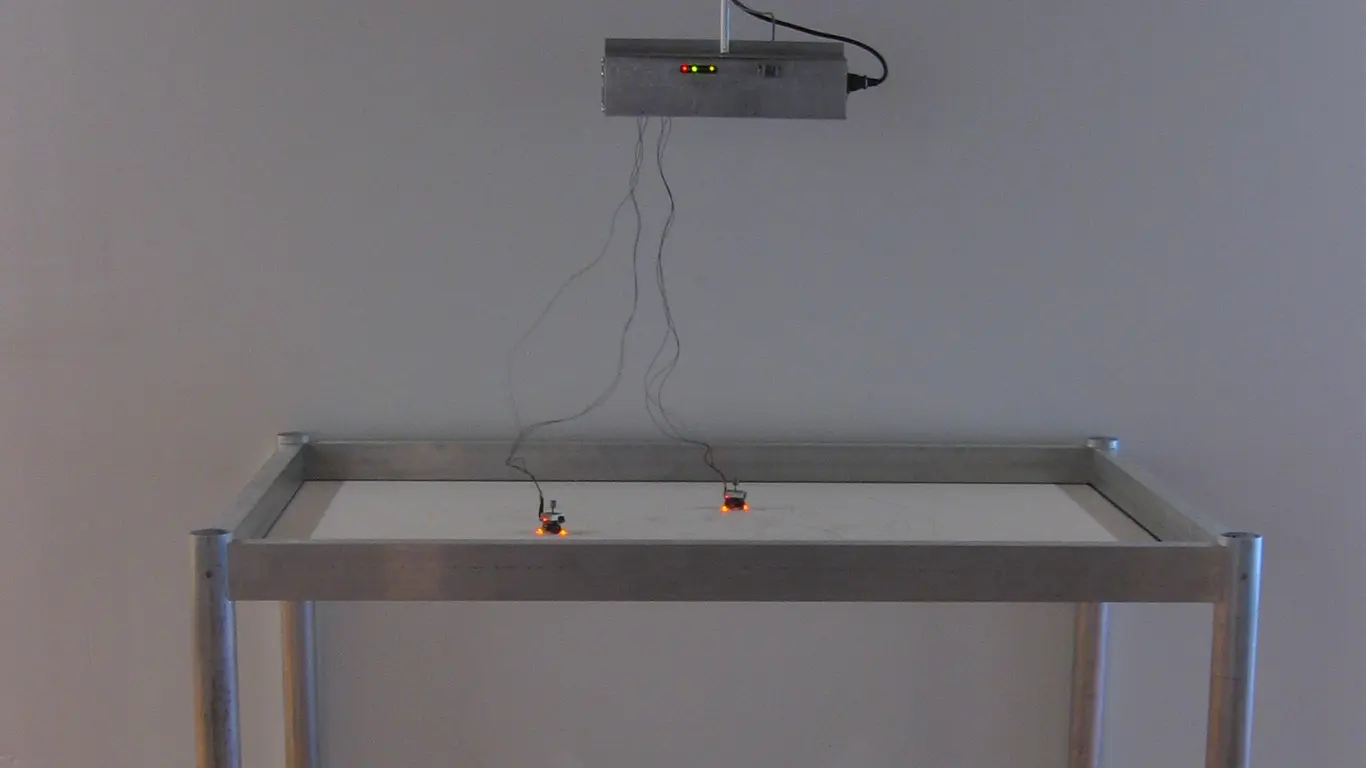
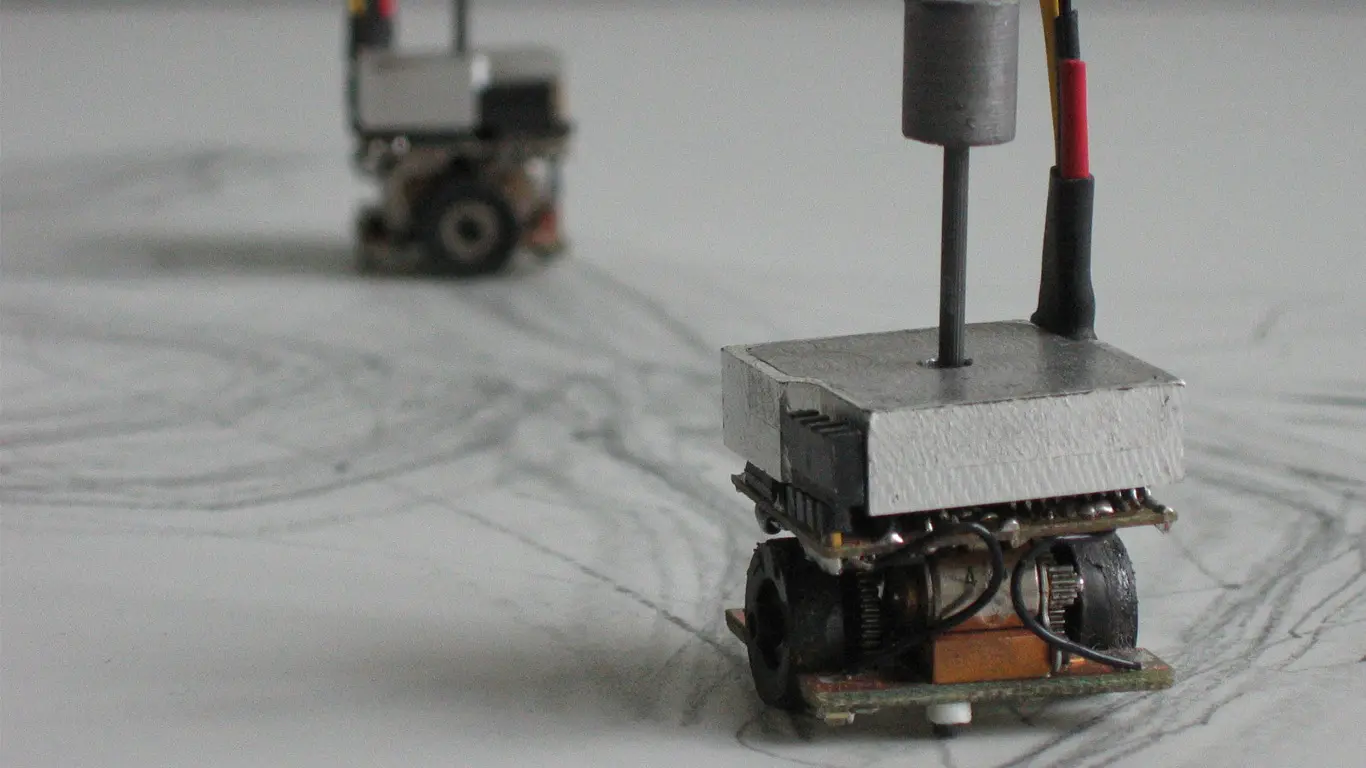
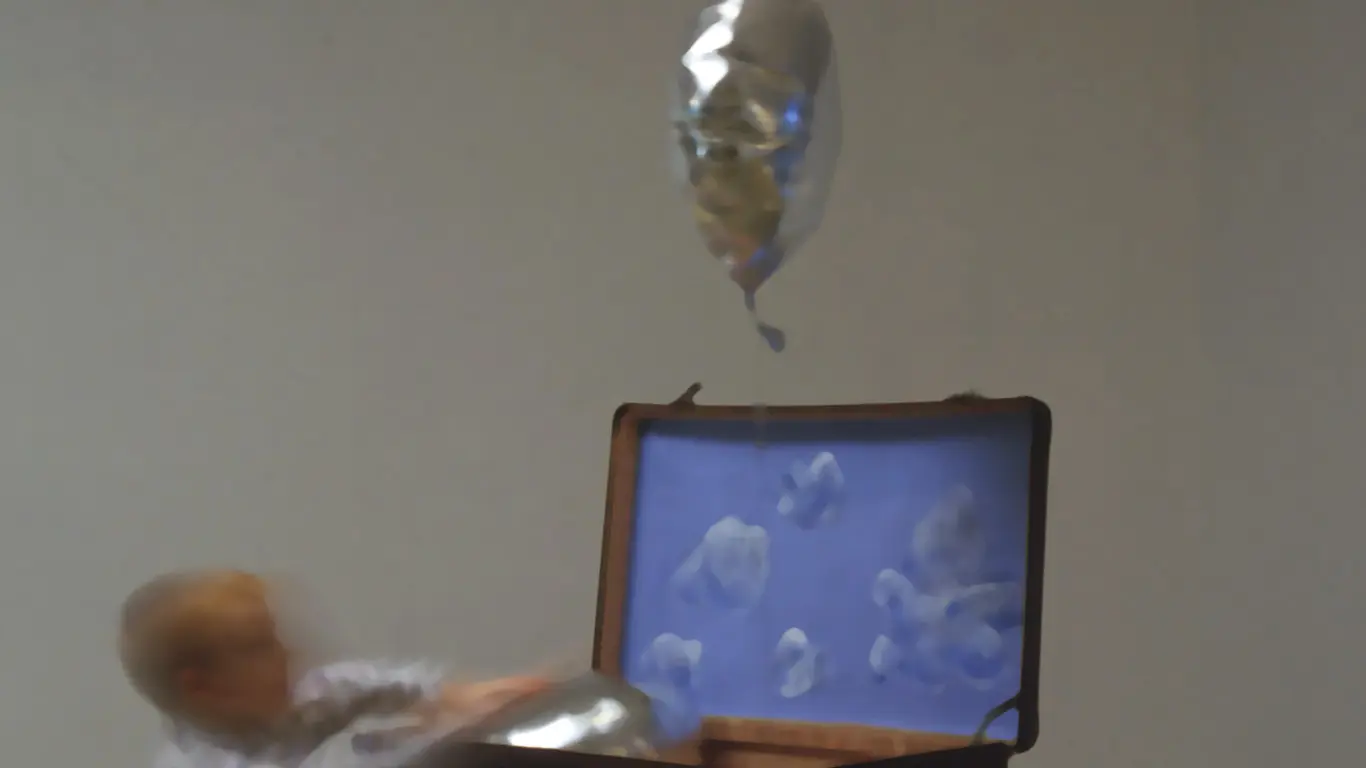
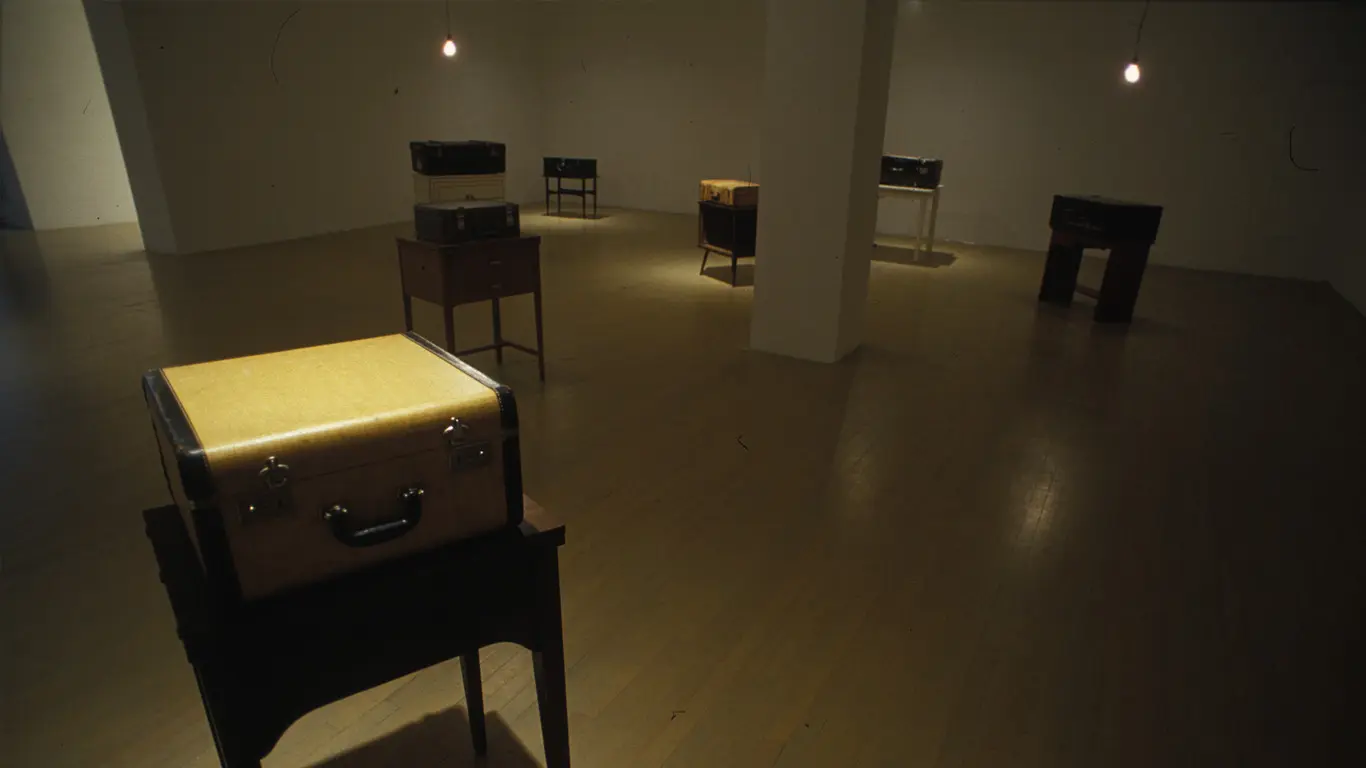
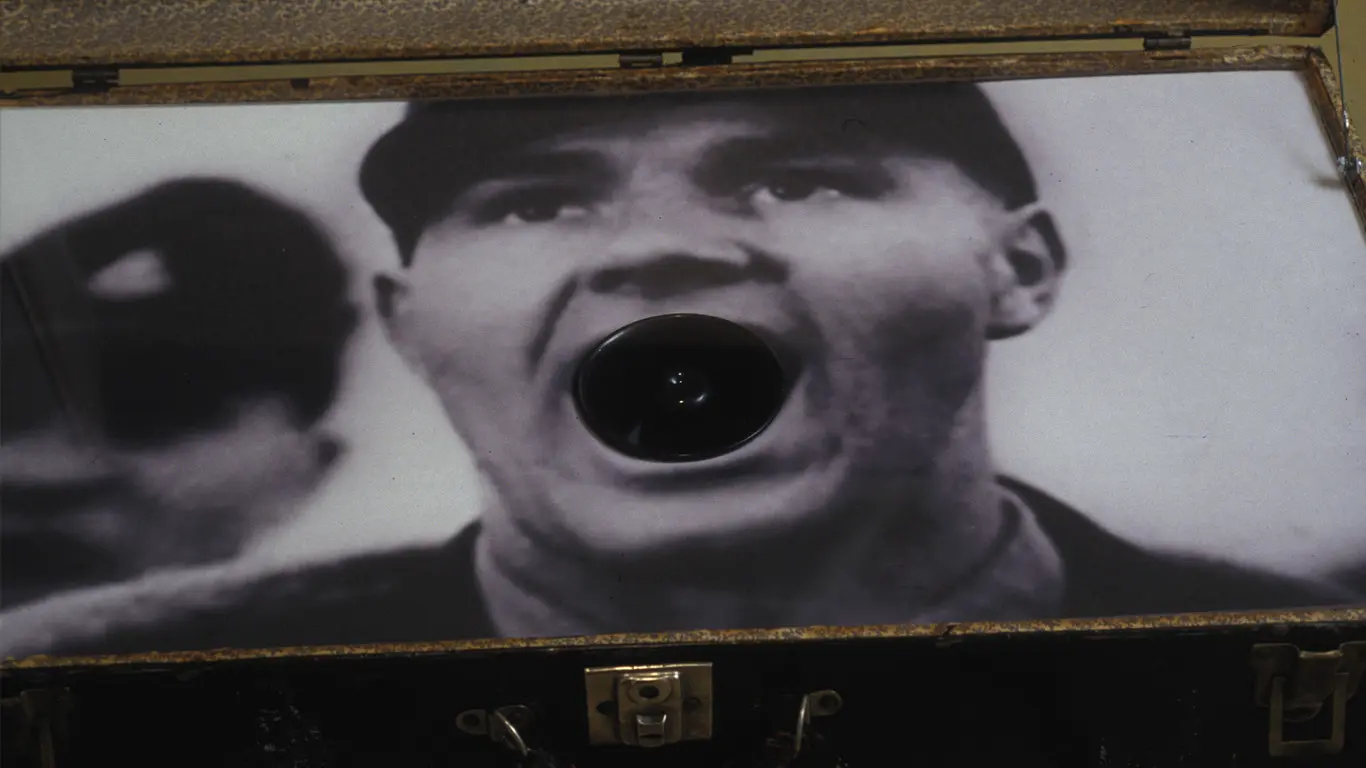
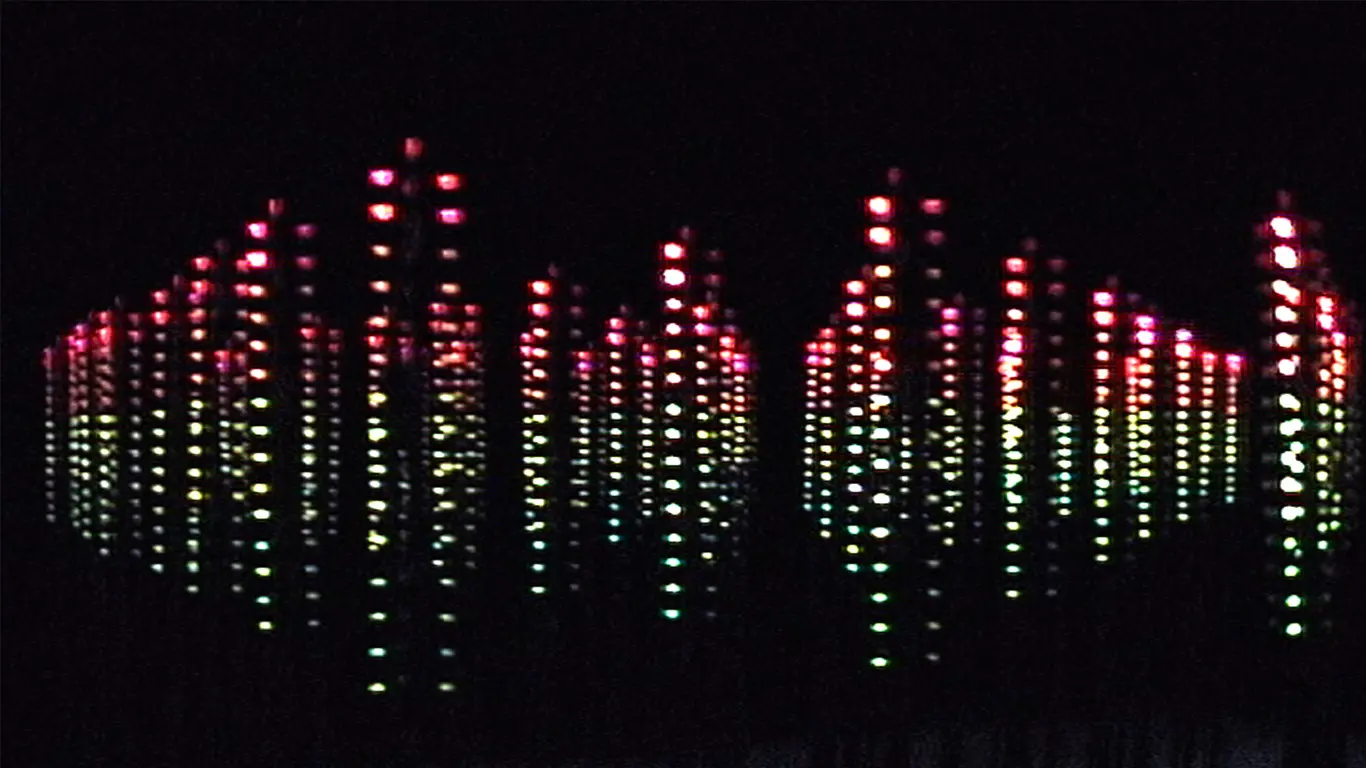
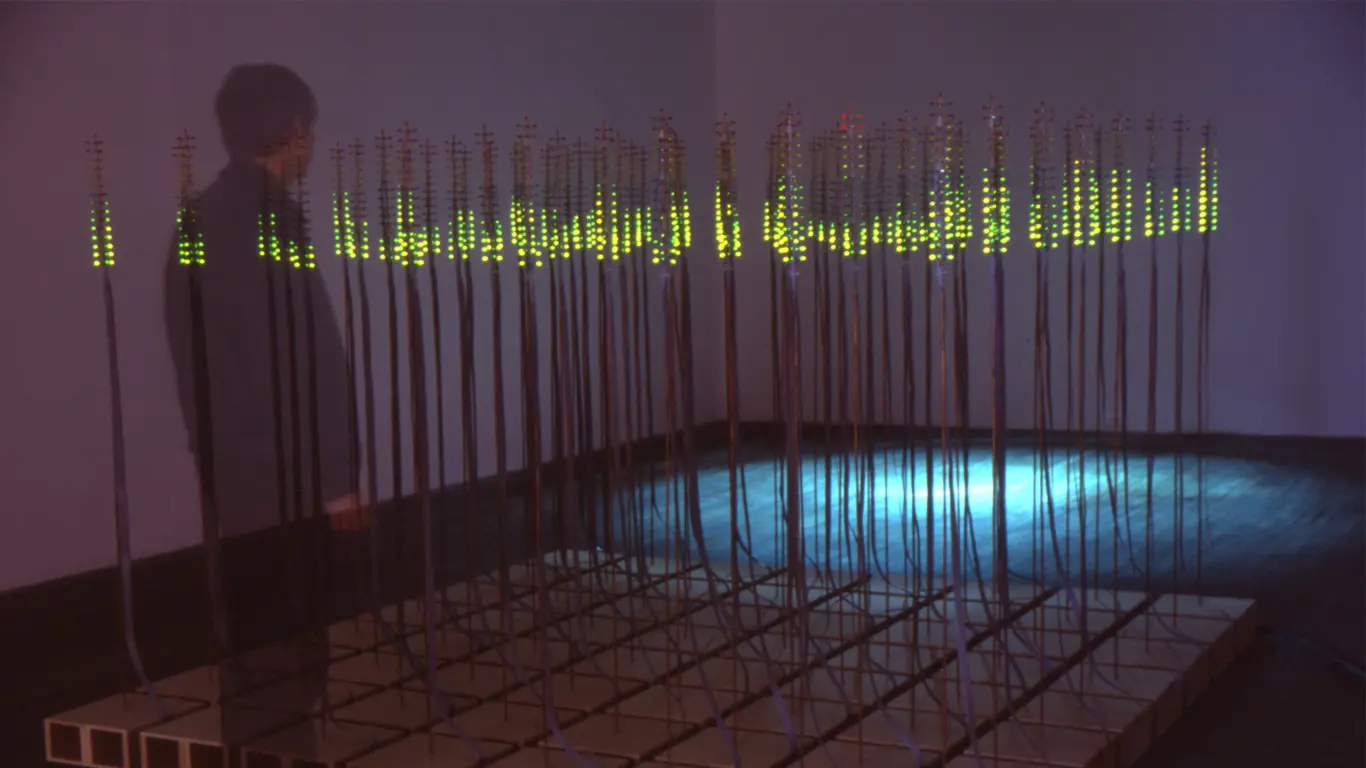
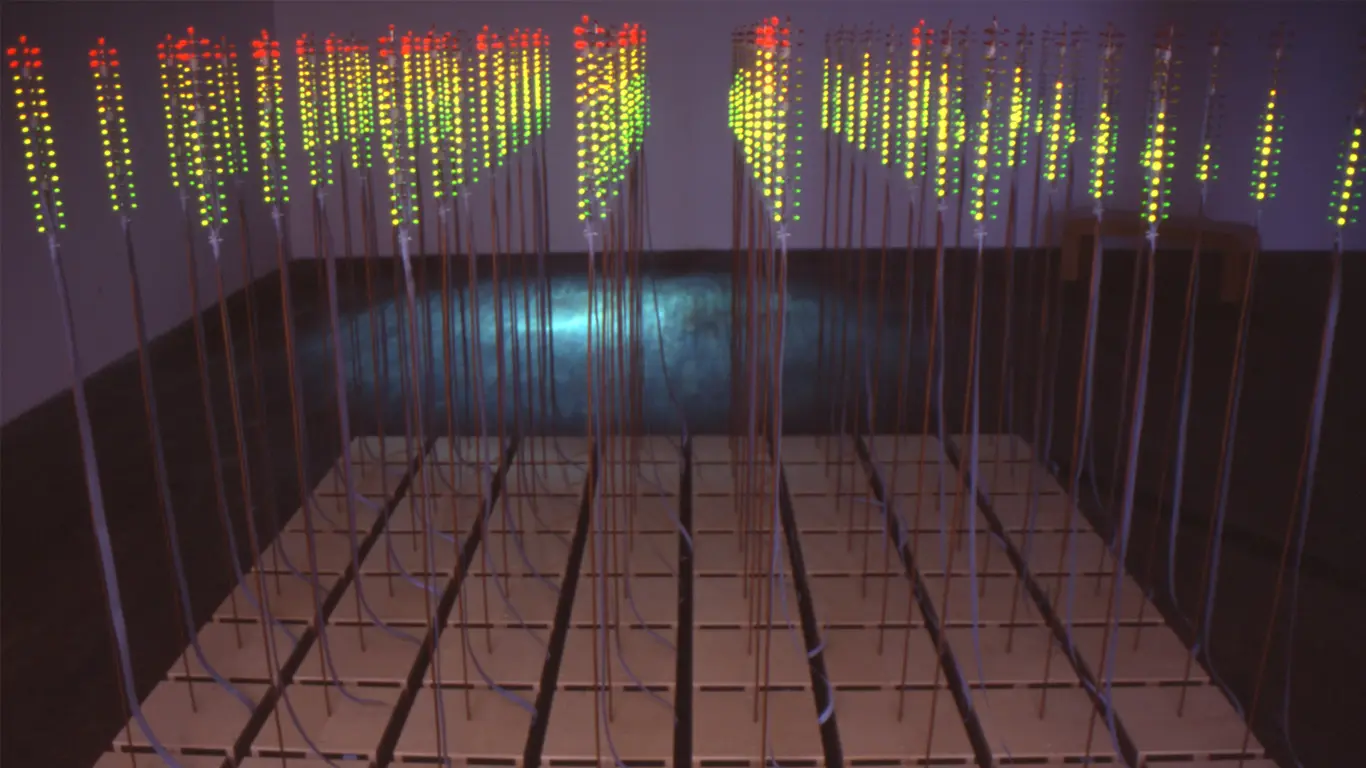
Dans cette exposition, Ingrid Bachmann présente un assortiment de valises, chacune ouvrant sur un récit animé et singulier (The Portable Sublime) ; Steve Heimbecker présente une analogie visuelle des fluctuations ondulatoires du vent (POD) ; Valérie Lamontagne utilise des interfaces technologiques pour activer des robes inspirées d’un conte (Peau d’Âne) ; Éric Raymond réussit à dessiner des cartographies fictives grâce à des robots miniatures (Scribes) et David Rokeby crée un environnement de surveillance qui suit le visiteur dans l’espace d’exposition (Taken).
Un aspect du titre Transitions, est le transit qu’opèrent les œuvres entre les différents espaces et géographies. Les valises, en tant que telles, conduisent ainsi à la mobilité et à la transposition. Dans les autres œuvres, les transpositions spatiales sont réalisées par des applications technologiques et par l’innovation : un champ de blé se retrouve métaphoriquement dans une galerie au Pérou ; des cartographies imaginaires proviennent de véritables géographies ; le groupe de spectateurs est transposé de sa position trois-dimensionnelle dans la galerie, vers une projection évanescente sur les murs.
Dans plusieurs œuvres, toutefois, le passage d’un état à l’autre est plus intangible – un élément invisible à l’œil dans son état naturel bien que toujours présent dans les œuvres : l’enregistrement visuel du vent sur un toit de Montréal ; l’interprétation matérielle de la lumière du soleil et des rayons de la lune ; des cartes issues d’ondes électromagnétiques.
La temporalité, également, subit des transitions et des transferts. Beaucoup d’œuvres utilisent des mécanismes d’enregistrement et de captation (vidéo, ordinateurs, senseurs, interfaces) comme éléments de structuration. Dans Taken de Rokeby, les actions générées « en direct » sont projetées en boucle, stratifiées, réitérées, pour ensuite s’estomper ; POD de Heimbecker transpose un espace balayé par le vent d’une nuit d’automne éphémère en 2005, en une interprétation plus vivante dans le présent ; Bachmann utilise les outils d’époques antérieures comme des nouvelles technologies contemporaines ; alors que Lamontagne, avec Peau d’Âne, un défi situé dans une fable du XVIIe siècle est transposé – et peut-être surpassé – dans le présent.
Le titre de l’exposition pourrait aussi suggérer des transpositions conceptuelles. Plusieurs valises de Bachmann ne transportent pas les effets personnels d’un voyageur, d’une place à une autre ; elles révèlent plutôt, lorsqu’elles sont ouvertes, qu’elles sont chacune, à sa façon, « le lieu » d’un monde imaginé. Le visiteur, dans l’installation de Rokeby, peut fluctuer radicalement entre l’action de l’attraction et celle du recul. Quant à l’installation de Heimbecker, elle opère à travers plusieurs transmetteurs conceptuels.
Les œuvres sont interactives de façons innombrables, lorsqu’elles répondent à un environnement naturel (POD, Peau d’Âne) ou sous l’influence du public (The Portable Sublime, Taken). Un élément d’interprétation est fréquemment en jeu : la robe Sun et la robe Moon de Peau d’Âne, présentées librement sur un support, peuvent aussi être vêtues ; les valises sont activées quand elles sont ouvertes, puis à nouveau fermées sur leurs mystères ; les actions du public génèrent les conditions propices à activer Taken ; les robots animent les dessins cartographiques de Scribes.
Le contexte cartographique renforce l’expérience des géographies et des lieux qui sont transposés dans ces œuvres : des émissions naturelles dans l’environnement immédiat sont éventuellement transposées dans un enregistrement cartographique par des robots ; les robes de Lamontagne présentent un type de cartographie météo tout en introduisant un paysage céleste ; Heimbecker « marque » le vent.
Les œuvres de Transitions transforment les familiarités de tous les jours – le vent, le ciel, le son, le mouvement et d’innombrables choses de notre monde matériel – en des portails de perceptions et d’expériences inattendues.
Renee Baert
Renee Baert travaille dans le domaine des arts visuels contemporains à titre de critique, de conservatrice, d’éditrice et de professeur. Les pratiques dans le domaine des arts médiatiques nouveaux représentent une importante partie de sa recherche, de ses écrits sur l’art vidéo du début des années 80 à sa récente exposition et à son catalogue sur le travail interactif robotique de Max Dean (Ottawa Art Gallery). Elle a été directrice et conservatrice de la galerie du Centre des arts Saidye Bronfman.
Artistes et œuvres
David Rokeby
Taken
2002
Installation interactive
Description de l'oeuvre
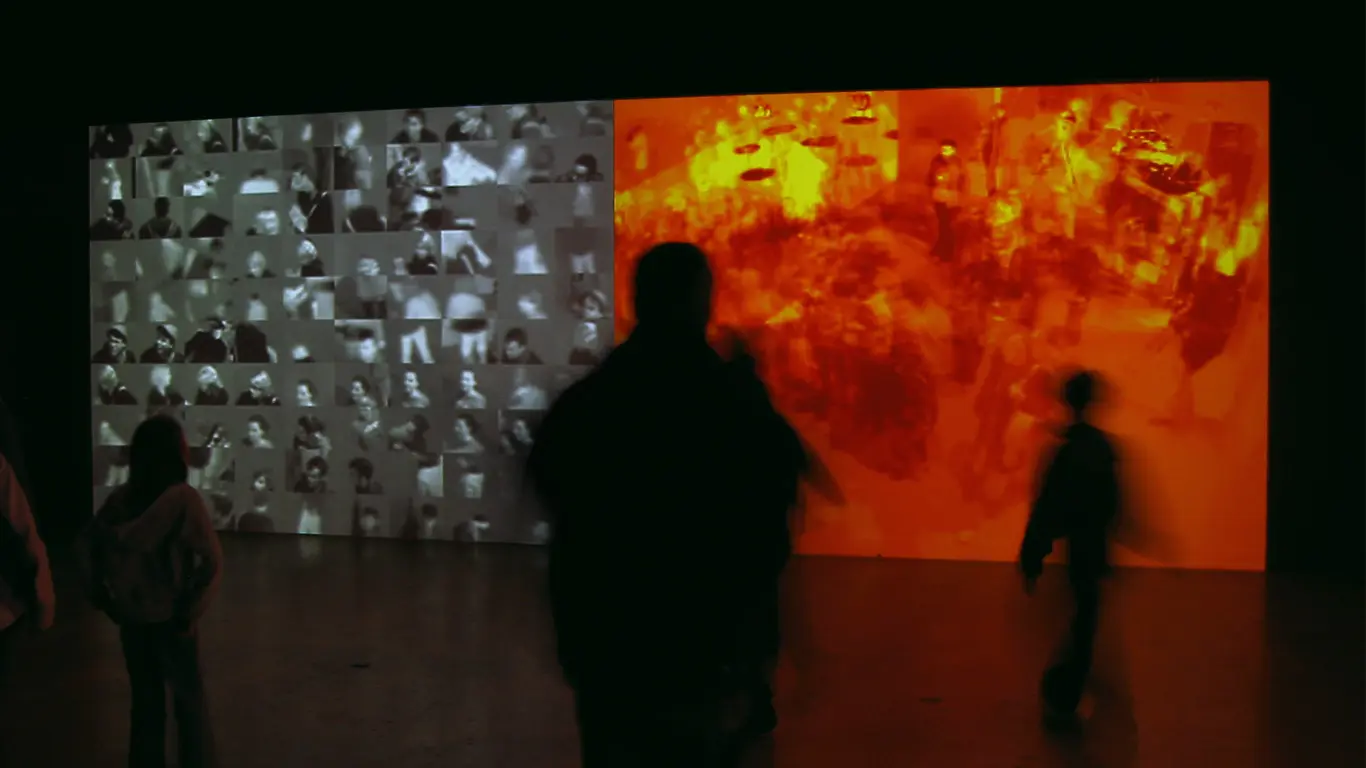
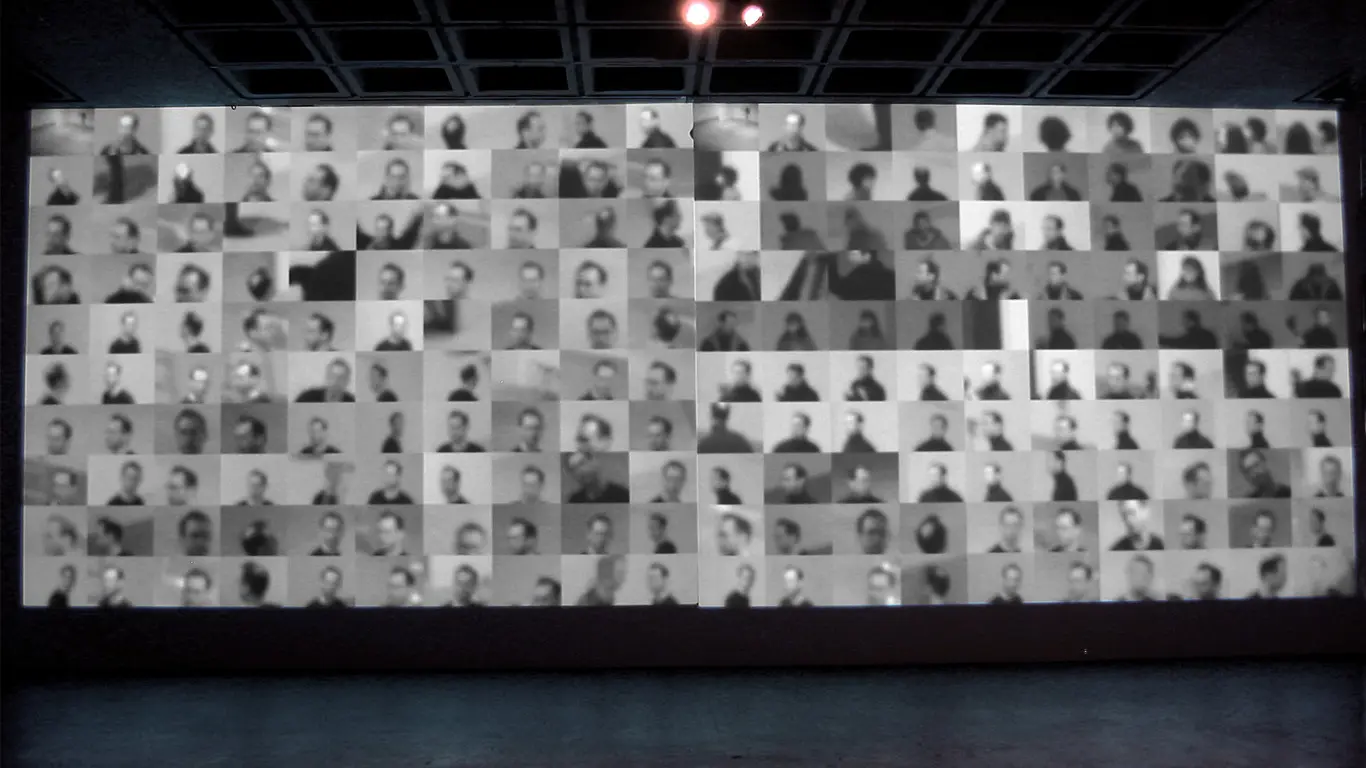
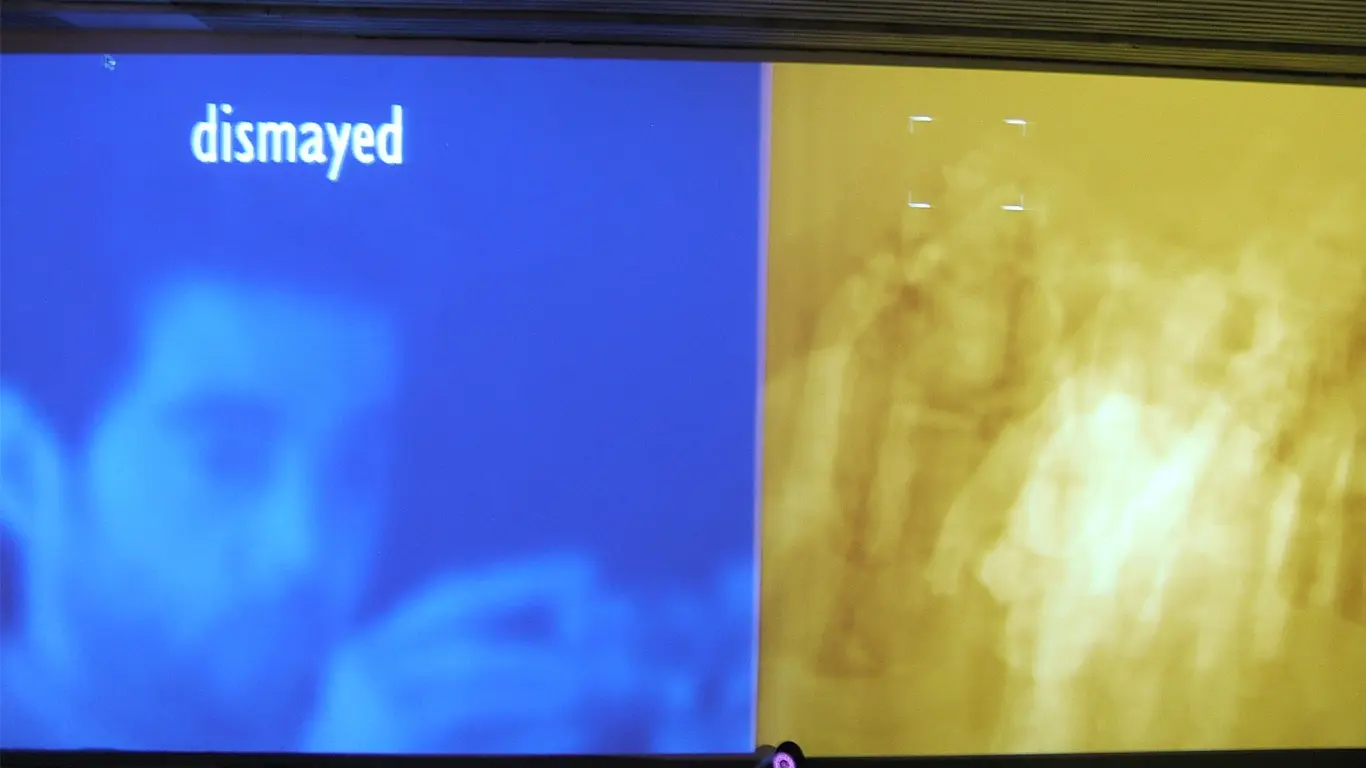
Taken est une installation de surveillance qui donne la possibilité d’une double lecture de l’activité se déroulant dans la galerie. Deux projections d’envergures apparaissent sur un des murs se trouvant dans un des grands espaces de la galerie. On voit sur la projection de gauche des images des visiteurs, filmées depuis le sol et les murs et projetées en boucle à un intervalle de vingt secondes. Ainsi, à partir du moment où l’ordinateur est en marche, les actions de tous les visiteurs de la galerie se retrouvent rassemblées sur l’écran de la projection, où elles se répètent à tous les vingt secondes. Le flot des images crée une sorte de chaos agité d’actions pouvant être perçu à la fois comme un portrait statistique de l’activité se déroulant dans la galerie (Où la majorité des visiteurs se tiennent-ils pour observer l’œuvre ? Se déplacent-ils dans l’espace ?) ainsi que comme le registre de chacune des actions posées par chacun des visiteurs. L’image projetée est d’une forte densité sociale, extrêmement stratifiée et chaotique. Sur la projection de droite apparaît, plus léger, le catalogue des visiteurs, qu’on suit de façon individuelle dans leur visite de la galerie. Le zoom se fait sur leur tête, et leur sont attribués des qualificatifs du type « sans méfiance », « complice » ou « affamé ». Ces images de tête sont intégrées à une collection comprenant les images de la tête des 200 derniers visiteurs, dont une centaine, et à l’occasion la totalité, sont projetées successivement au ralenti. Ce côté de l’installation est analytique, très ordonné et plutôt menaçant.
Biographie
Vit et travaille à Toronto
David Rokeby crée des installations interactives réagissant à la présence du spectateur ou explorant le potentiel de la base de données. Ses œuvres comportent aussi des interfaces permettant de capter et de transformer les mouvements des individus en sons ou en images.
Il expose régulièrement au Canada, aux États-Unis, en Europe et en Asie, notamment au Beall Center for Art + Technology (Irvine, Californie) en 2015, au Fresnoy – Studio national des arts contemporains (Tourcoing, France) en 2012, et au Whitney Museum of American Art (New York). Il a participé à des évènements internationaux, dont Electrohype 2010 (Ystad, Suède) et le Mois de la photo à Montréal (2009), Transmediale Festival (Berlin, Allemagne) et la Biennale de São Paulo en 2007. Molior a présenté son travail lors de Transitions / Transiciones, au Centro Cultural de la Pontificia Universidad Católica del Perú (PUCP) à Lima en 2007, et lors de SYNTHETIC TIMES – Media Art China 2008 au National Art Museum of China (NAMOC), Beijing.
En 1988, il obtient le Prix Petro-Canada en arts médiatiques. Le Ars Electronica Award of Distinction for Interactive Art (Autriche) lui est remis en 1991, en 1997 (conjointement avec Paul Garrin) et en 2002, année où il reçoit également le Prix du Gouverneur général en arts médiatiques.
Le Musée des beaux-arts de Montréal, le Musée des beaux-arts du Canada, la fondation Daniel Langlois et le Agnes Etherington Art Centre possèdent de ses œuvres. David Rokeby a également réalisé plusieurs œuvres d’art public.
Éric Raymond
Scribes
2005
Installation
Description de l'oeuvre
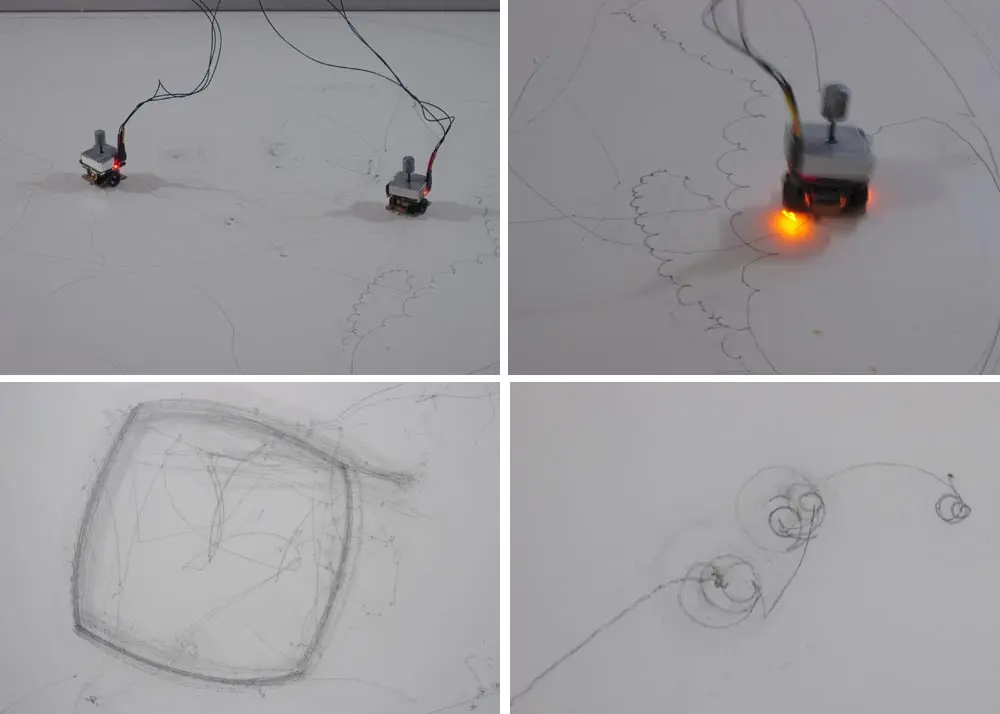
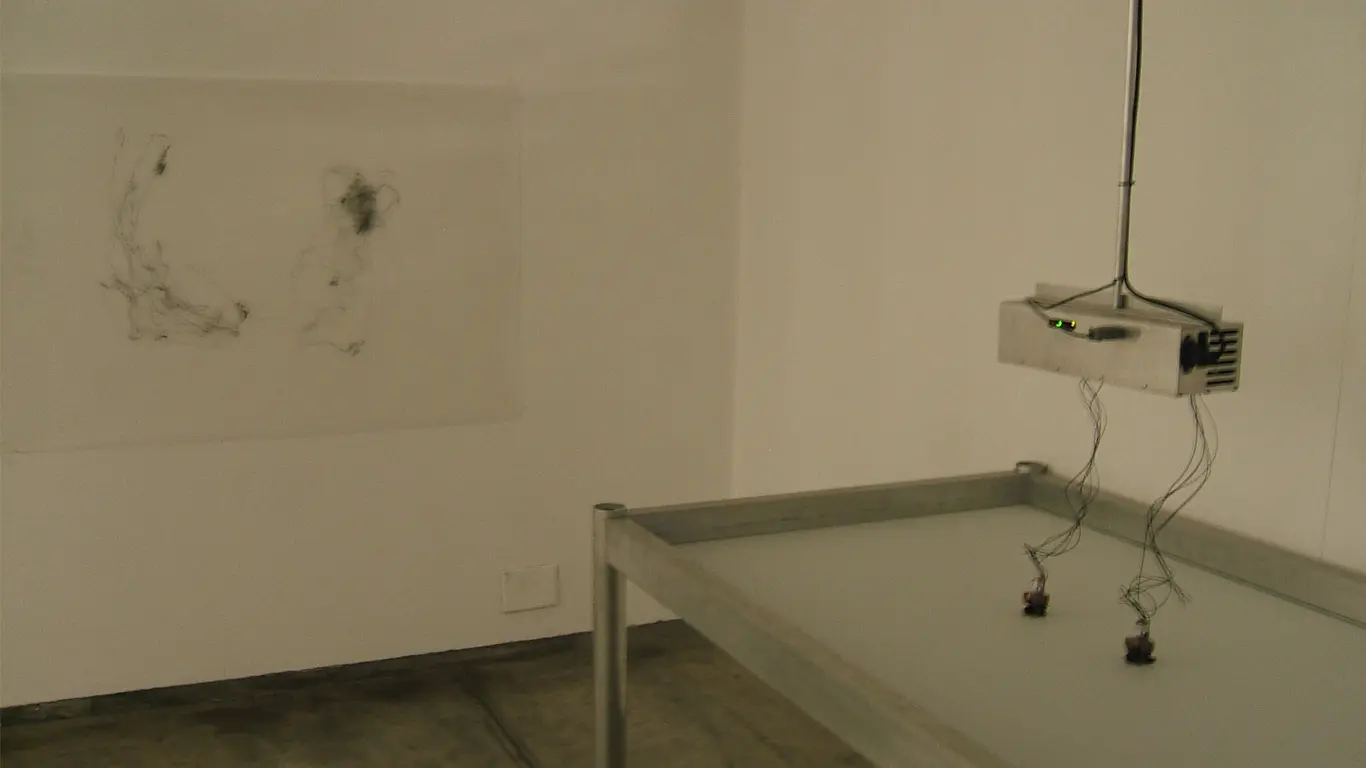
Scribes est une installation d’art médiatique utilisant des robots miniatures et des ondes radio afin de dessiner des représentations cartographiques issues d’une multitude de sources d’émission. Images satellites et interférences électromagnétiques d’origine naturelle s’y confondent pour créer une représentation nouvelle des phénomènes nous entourant. La carte qui en résulte, consistant en une superposition complexe d’images provenant d’ondes radio d’origine à la fois naturelle et humaine, donne une représentation dont le contenu dépasse le seuil de la perception. Cette installation crée un environnement fortement évocateur où langage et glissement des donnés sont exploités pour leur valeur métaphorique.
Biographie
Éric Raymond travaille dans le domaine des arts électroniques depuis plus d’une dizaine d’années. Il a régulièrement exposé sur la scène nationale et internationale notamment à la Absolut L.A. International Biennial Art Invitational (Los Angeles, U.S.A.), à Ars Electronica (Linz, Autriche), L.A.Freewave (Los Angeles U.S.A.), Artcore Gallery (Toronto) ainsi que chez Dazibao (Montréal). Il publie occasionnellement chez Parachute art contemporain, Archée et HorizonZero. Il enseigne à l’École des arts visuels et médiatiques de l’Université du Québec à Montréal.
Ingrid Bachmann
The Portable Sublime
2003
Installation
Description de l'oeuvre
Valises assorties, interrupteurs, senseurs lumineux, bateaux mécaniques, haut-parleurs, eau, pompe à eau, deux lecteurs DC, amplificateurs, ballons, verre, métal, matériaux assortis.
Tout ce matériel et une exposition que l’on pourrait qualifier de pratique explorent la possibilité de contenir le sublime dans une forme «utilisable». Le sublime évoque généralement le grand, l’éthéré et il implique aussi habituellement de laisser toute considération matérielle derrière. Assurément, vous associez rarement le lavage de vos vêtements au sublime… En utilisant des matériaux prosaïques, je veux créer des espaces merveilleux portatifs.
Biographie
Vit et travaille à Montréal
Ingrid Bachmann est connue pour ses installations interactives combinant la technologie et des objets du quotidien. Multidisciplinaires, ses travaux relèvent des domaines du textile, de la sculpture et de l’art cinétique. Son utilisation de la technologie vise à la démystifier et à l’humaniser, en y intégrant une dimension sensuelle et émotionnelle destinée à contrer l’aliénation souvent associée à la machine.
Son travail a été exposé au Québec, au Canada et à l’étranger, notamment en Europe à plus d’une reprise. Elle a aussi participé à plusieurs évènements internationaux en arts visuels et numériques. Molior a présenté son travail dans le contexte de Despertar / Éveil / Alive, au Sesc Santana de São Paulo (Brésil) en 2014, Transitions / Transiciones, au Centro Cultural de la Pontificia Universidad Católica del Perú, à Lima, et lors de B/R/T Le corps habité à Montréal en 2007.
Professeure associée à l’Université Concordia (Montréal), Ingrid Bachmann a été membre fondatrice d’Hexagram, un institut interuniversitaire de recherche et de création en arts médiatiques. Elle est directrice de l’Institute of Everyday Life, un laboratoire-atelier sur le quotidien. Elle a été conférencière invitée au Goldsmiths College (Londres), à l’Université de Wollongong (Australie), à l’Université du Maryland (Baltimore) et à l’Art Institute de Chicago.
Steve Heimbecker
POD
2003
Installation
Description de l'oeuvre
POD (2003) est la première installation exploitant le système Wind Array Cascade Machine (WACM). Elle consiste en 64 canaux utilisant 2 880 diodes électroluminescentes (DEL) capables de construire en temps réel une représentation quadridimensionnelle du vent. Les 64 « pods » fonctionnent comme des jauges qui mesurent la force du vent détectée par chacun des 64 capteurs du réseau de WACM. POD reproduira le vent précédemment enregistré par le système et, lorsque c’est possible, le vent soufflant en temps réel sur Montréal. La dernière exposition de POD a eu lieu à la galerie montréalaise Oboro, immédiatement après une première européenne présentée au musée d’art contemporain Kiasma, à Helsinki en Finlande, pour l’ISEA 2004.
Biographie
Établi à Montréal, au Québec, le Canadien Steve Heimbecker a étudié les beaux-arts au College of Art and Design d’Alberta à Calgary. Depuis près de vingt ans, il se fait connaître au Canada pour ses installations sonores et ses performances ainsi que pour ses compositions de diffusion sonore multicanaux. Ses installations et ses performances ont été présentées au Canada dans le cadre de nombreux festivals, comme The Works, Send + Receive, Mois Multi et Subtle Technologies, et exposées dans plusieurs galeries, comme le Glenbow Museum, la Illingworth Kerr Gallery, Avatar et Oboro. En Europe, ses oeuvres ont dernièrement été présentées par le musée d’art contemporain Kiasma de Finlande, dans le cadre l’ISEA 2004 Wireless Exhibition, ainsi que par l’ORF Kunstradio & Ars Electronica Centre d’Autriche. Il travaille actuellement sur deux projets de longue haleine : la série « Songs of Place » et une nouvelle série d’installations médiatiques en réseau exploitant le système « Wind Array Cascade Machine » et leur publication sur DVD 5.1 ambiophonique.
Valérie Lamontagne
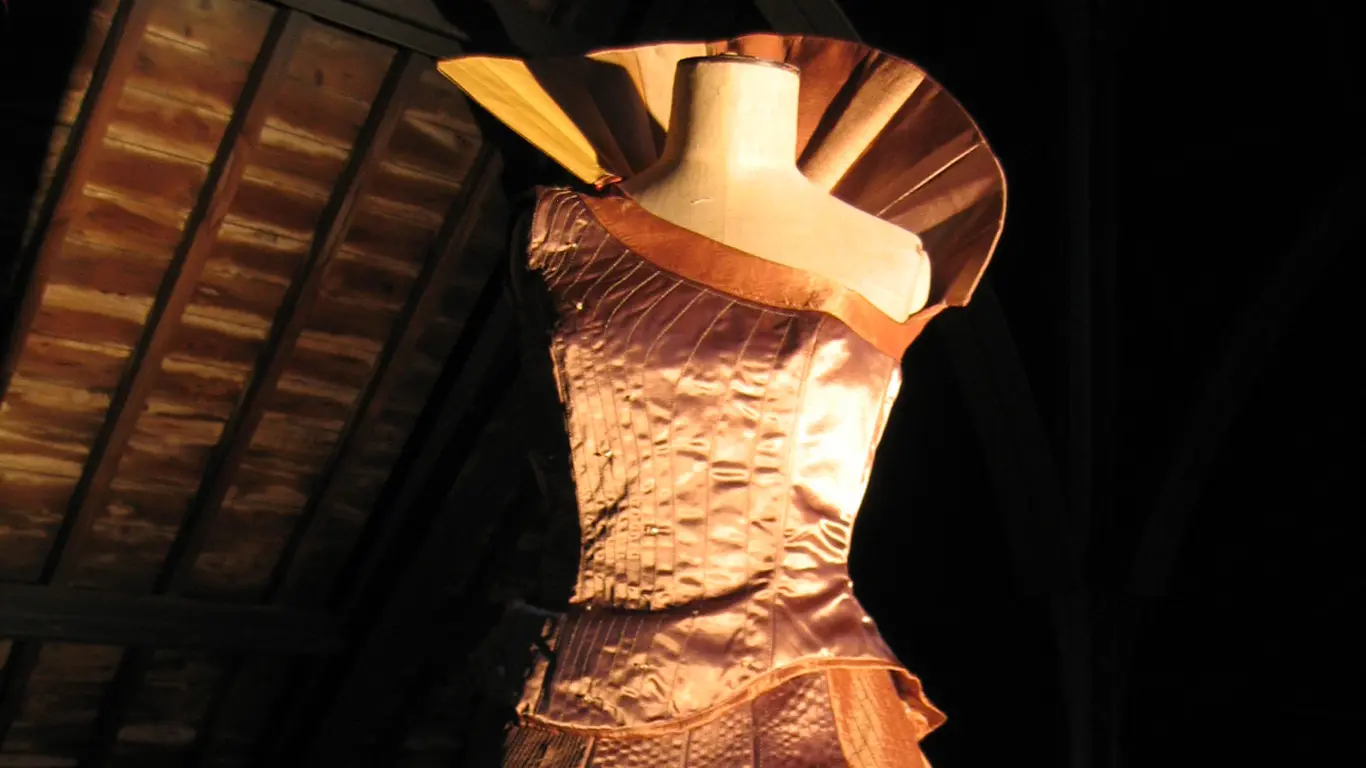
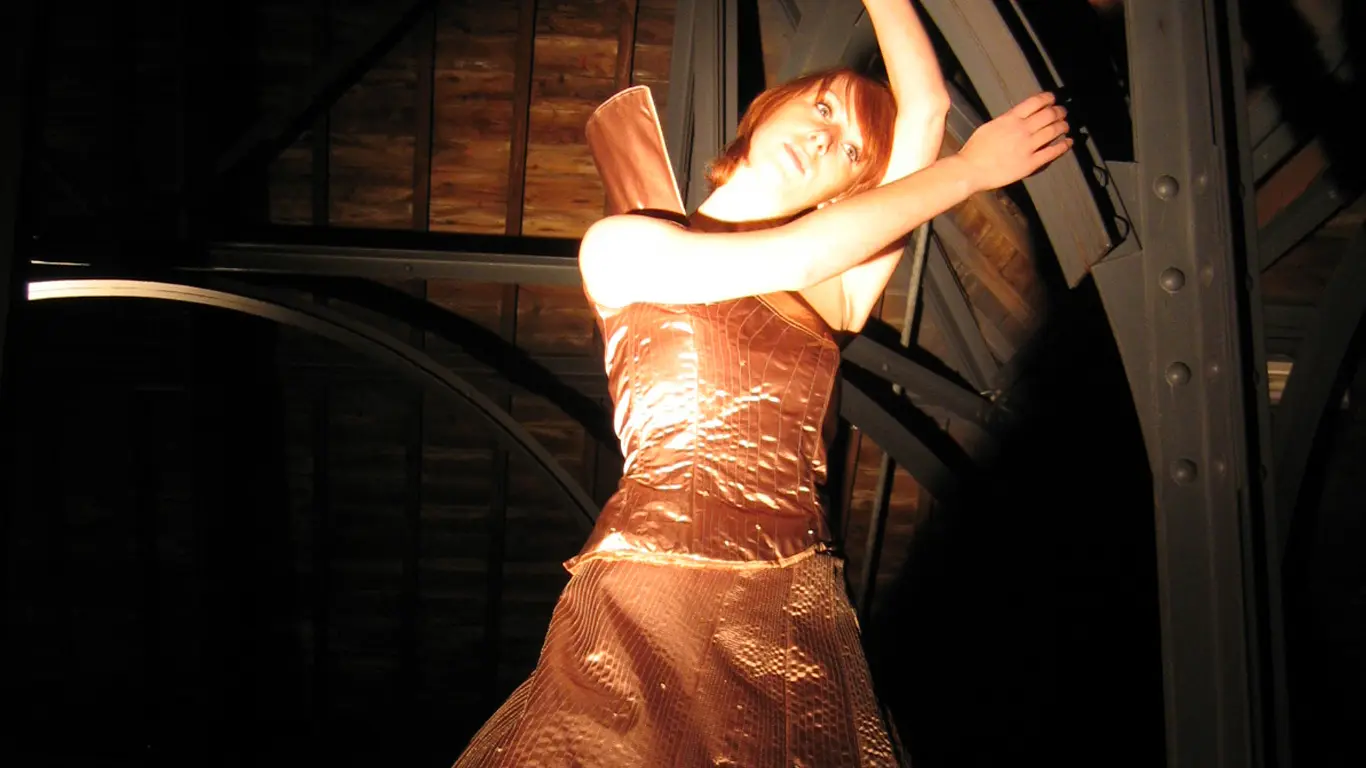
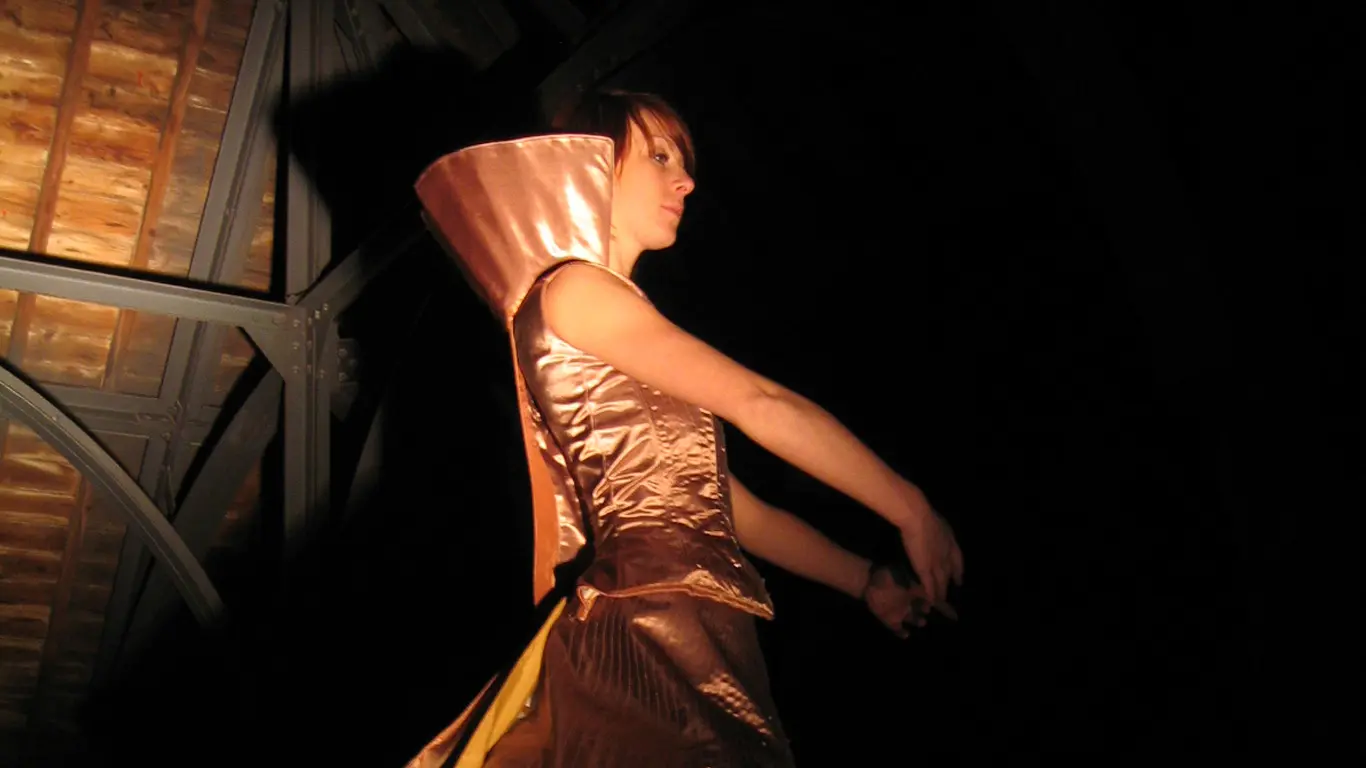
Peau d’âne
2005-2008
Installation
Description de l'oeuvre
Le conte de Charles Perrault « Peau d’âne » raconte l’histoire d’une jeune princesse qui, vivant dans un royaume où la richesse des gens fortunés provient d’un âne aux excrétions d’or, demande pour dot à son père qui veut l’épouser des objets impossibles à trouver afin d’éviter cette union. Elle exige ainsi trois robes faites de matériaux immatériels : la première doit être tissée avec le « ciel » et être aussi légère et aérienne que les nuages, la seconde doit être tissée avec les « rayons de la lune » et inspirer la même intensité lyrique que la lune, et la dernière doit être tissée avec la « lumière solaire » et être aussi aveuglante et chaude que les rayons du soleil qui nous nous domine.
Ce projet s’inscrit dans le cadre d’une recherche sur le corps portant principalement sur la performance relationnelle et ubiquiste. Explorant différents contextes historiques centrés sur la notion de performance et créant de nouveaux scénarios adaptés à des technologies prêtes-à-porter et des technologies de détection, Peau d’Âne cherche à créer un pont entre la vérité que porte la symbolique des contes de fées et les innovations technologiques contemporaines. Plus particulièrement, ce projet explore la possibilité pour les technologies prêtes-à-porter de devenir de véritables agents de la performance.
Biographie
Établie à Montréal, Valérie Lamontagne est performeure, artiste médiatique, critique d’art à la pige et conservatrice indépendante. Elle est titulaire d’une maîtrise en beaux-arts de l’Université Concordia (Montréal), où elle enseigne actuellement au département du design et des arts informatiques (Design and Computation Arts). Elle est également la cofondatrice, avec Brad Todd, du collectif portant sur les arts médiatiques MobileGaze. Aspirante au doctorat, ses travaux de recherche à l’Université Concordia portent sur « l’art de la performance relationnelle et ubiquiste ».